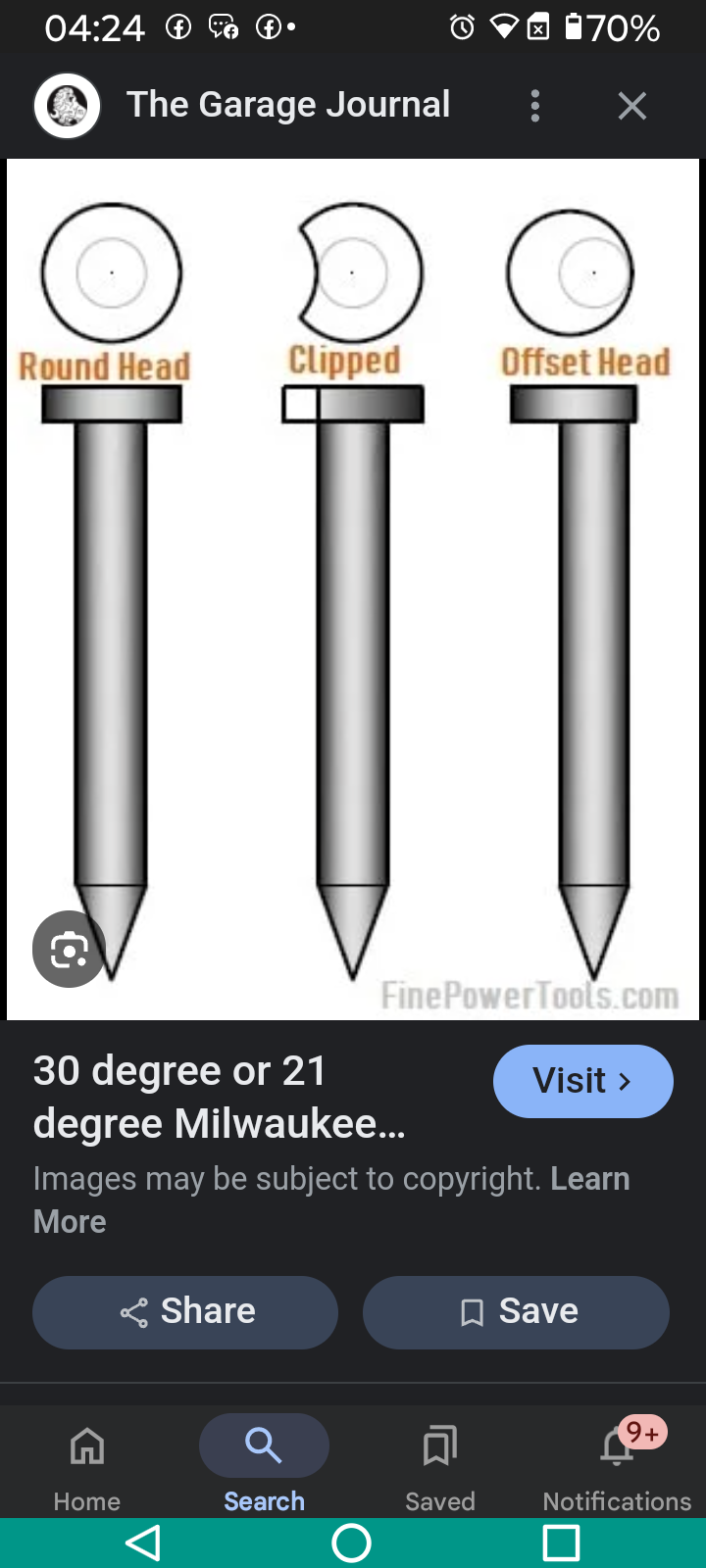
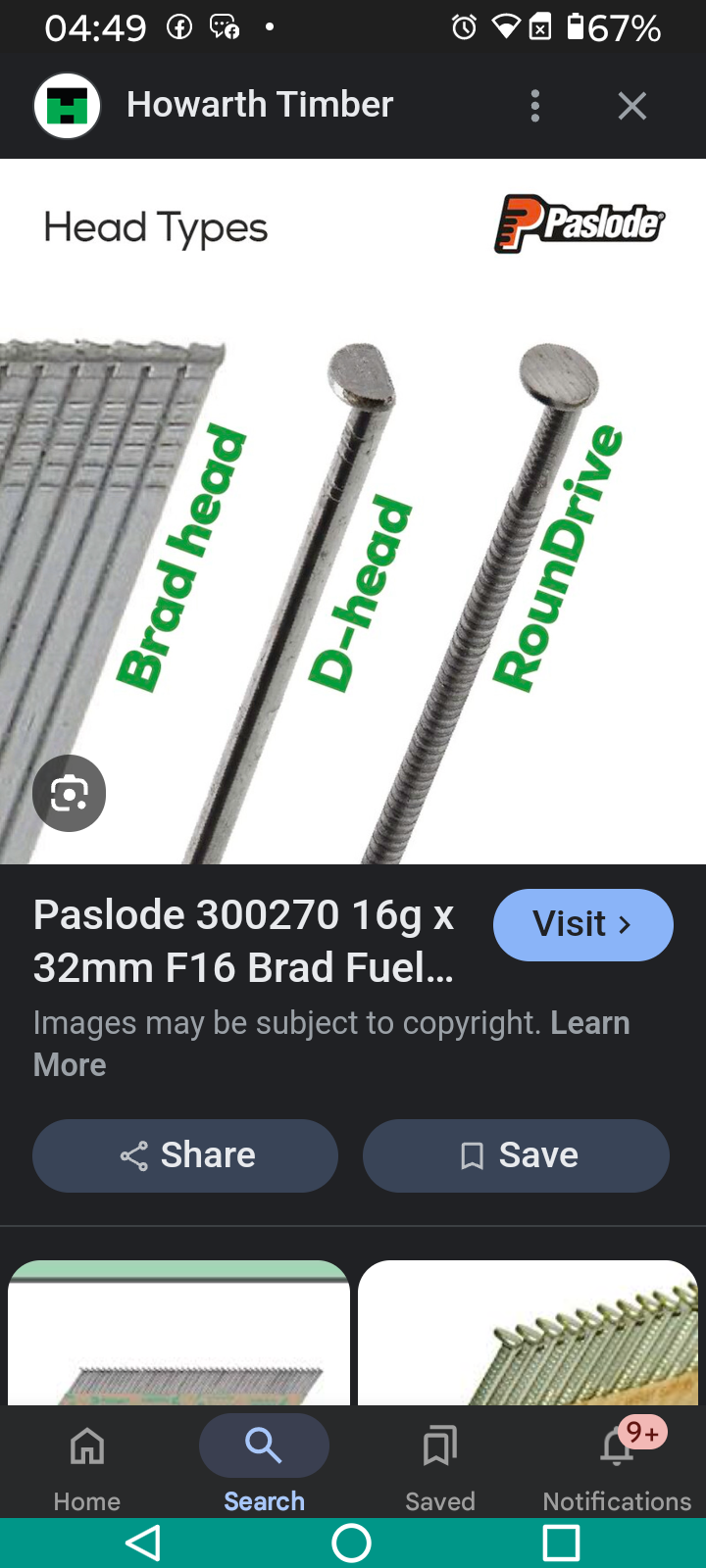
offset-head nail has a full, round head that is positioned off-center, or to one side, of the nail's shaft, allowing for tighter packing in nail strips and greater nail capacity in nail guns.
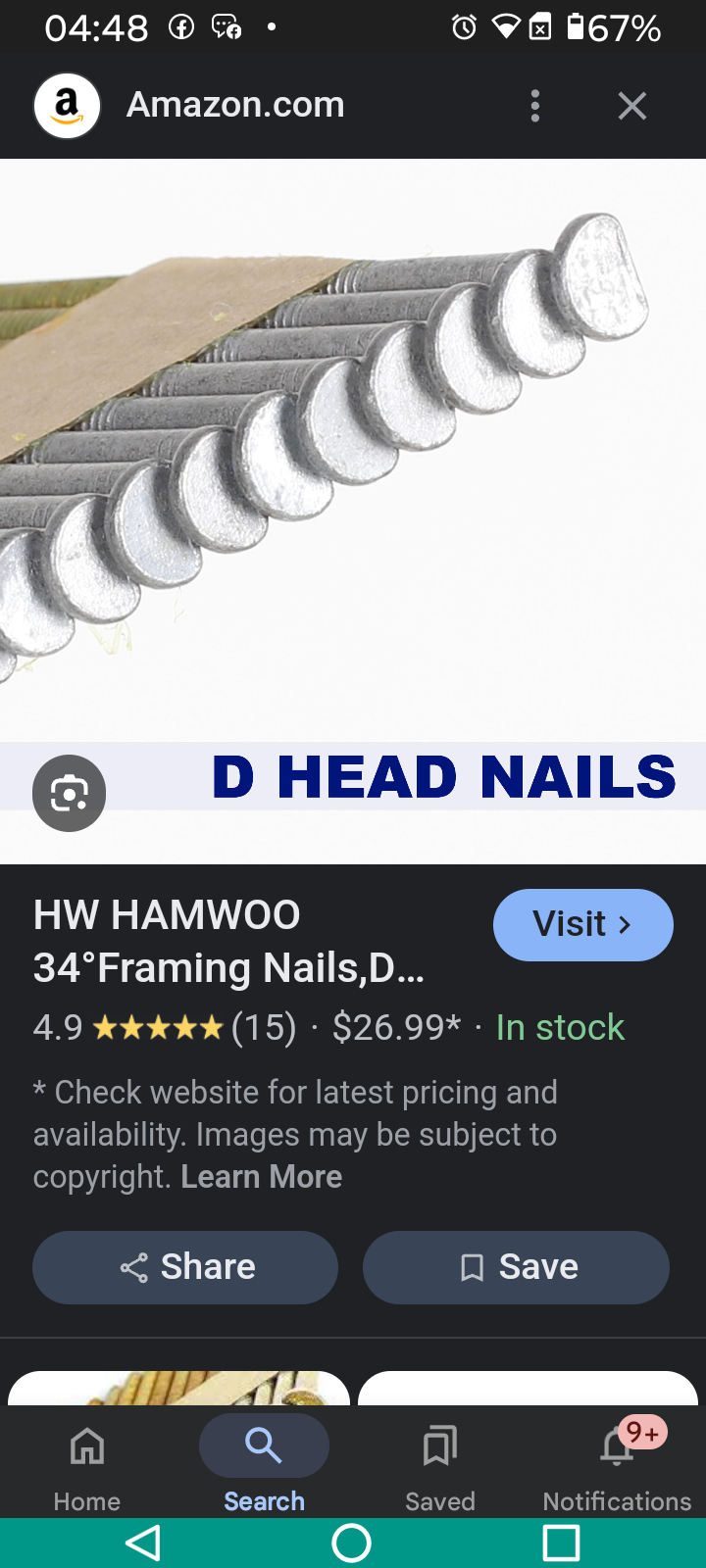
Clipped-head nails;
often used in framing and construction, feature a D-shaped head that allows for closer nail placement and greater magazine capacity in nail guns, leading to increased efficiency and productivity.
Are the nails the same thickness between round head nail and off-center framing nail?
No, round head nails and off-center framing nails are not typically the same thickness, although both are used for framing, with off-center nails often having a thinner shank than round head nails.
Here's a more detailed explanation:
Round Head Nails:
These nails have a round head and are often used for general-purpose fastening and construction, offering good contact with the hammer but potentially creating a rougher finish.
Off-Center Framing Nails:
These nails have a head that is offset from the center of the nail shank, which allows them to be used in nail guns that require a specific nail head shape. They are often thinner than round head nails.
Thickness Differences:
Round Head Nails: The thickness (or gauge) of a round head nail is determined by the "d" (penny) system, with larger numbers indicating thicker nails. For example, a 16d nail is thicker than an 8d nail.
Off-Center Framing Nails: These nails are often designed to be thinner than round head nails to allow for easier driving and to minimize splitting of the wood, with a common gauge being .131 inches.
;Framing Nail Types:
Ring-shank nails : These nails have a ring-shaped shank that provides extra holding power.
Smooth-shank nails : These nails have a smooth shank and are used for general framing applications.
Nail Gun Compatibility :
Nail guns are designed to use specific types of nails, so it's important to ensure that the nail gun and nails are compatible.
Choosing the Right Nail:
The best nail for a framing project depends on the specific application, the type of wood being used, and the desired level of holding power.
못 굵기,
-----------
What are the difference between 21 degree or 30 degree nail guns?
The primary difference between 21-degree and 30-degree framing nail guns lies in the angle of the nail magazine and the type of nails they use, with 30-degree nailers offering better maneuverability in tight spaces and using clipped or offset-head nails, while
21-degree nailers use full-round head nails and plastic strips.
Here's a more detailed breakdown:
Nail Type:
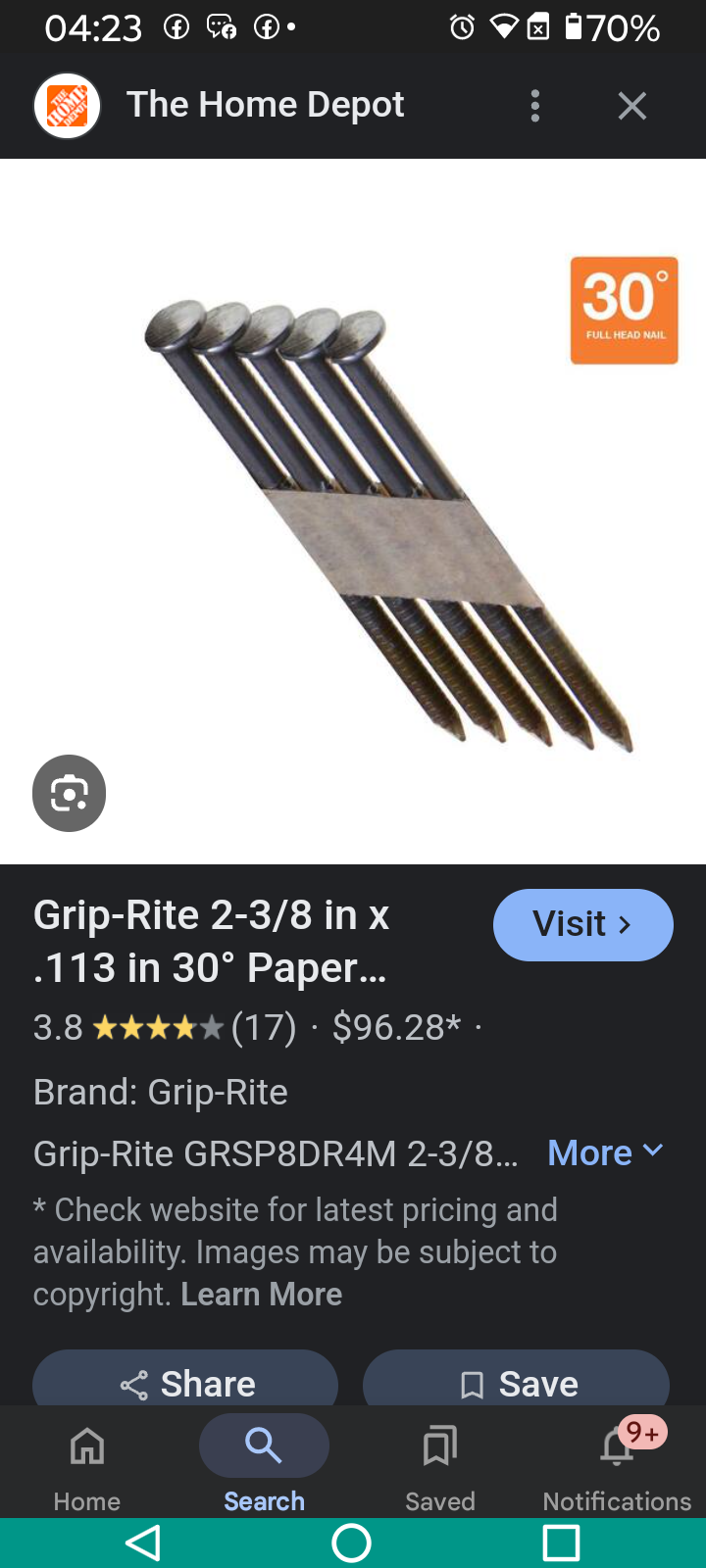
21-degree : Typically use full-round head nails, held together by plastic strips.
30-degree : Primarily use clipped or offset-head nails, also held together by paper strips.
;Magazine Angle and Maneuverability:
21-degree: The magazine angle allows for good access to most areas, but may be less maneuverable in tight corners.
30-degree: The steeper angle allows for better access to tight corners and spaces.
Clean-up:
21-degree: The plastic strips can leave more debris to clean up.
30-degree: The paper strips are generally easier to clean up, but can become unusable if they get wet.
Nail Capacity:
21-degree: Typically hold fewer nails than 30-degree nailers.
30-degree: Can hold more nails due to the closer packing of the nails in the magazine.
Building Codes:
21-degree: Full-head nails are generally more widely accepted by building codes.
30-degree: Clipped or offset-head nails may not be allowed in all areas, depending on local building codes.
Cost:
21-degree: Some users report that 21-degree nailers and nails are often cheaper than 30-degree nailers and nails.
30-degree: Some users report that 30-degree nailers and nails are more expensive.